21.09.2026
Creation is not always an explanation. Sometimes, it is only evidence that an unnamed feeling once existed.
NOTES ON MAKING / 001
Artist / Visual Diary
李紫月
Between memory and imagination, I paint what cannot be said.
View work ↓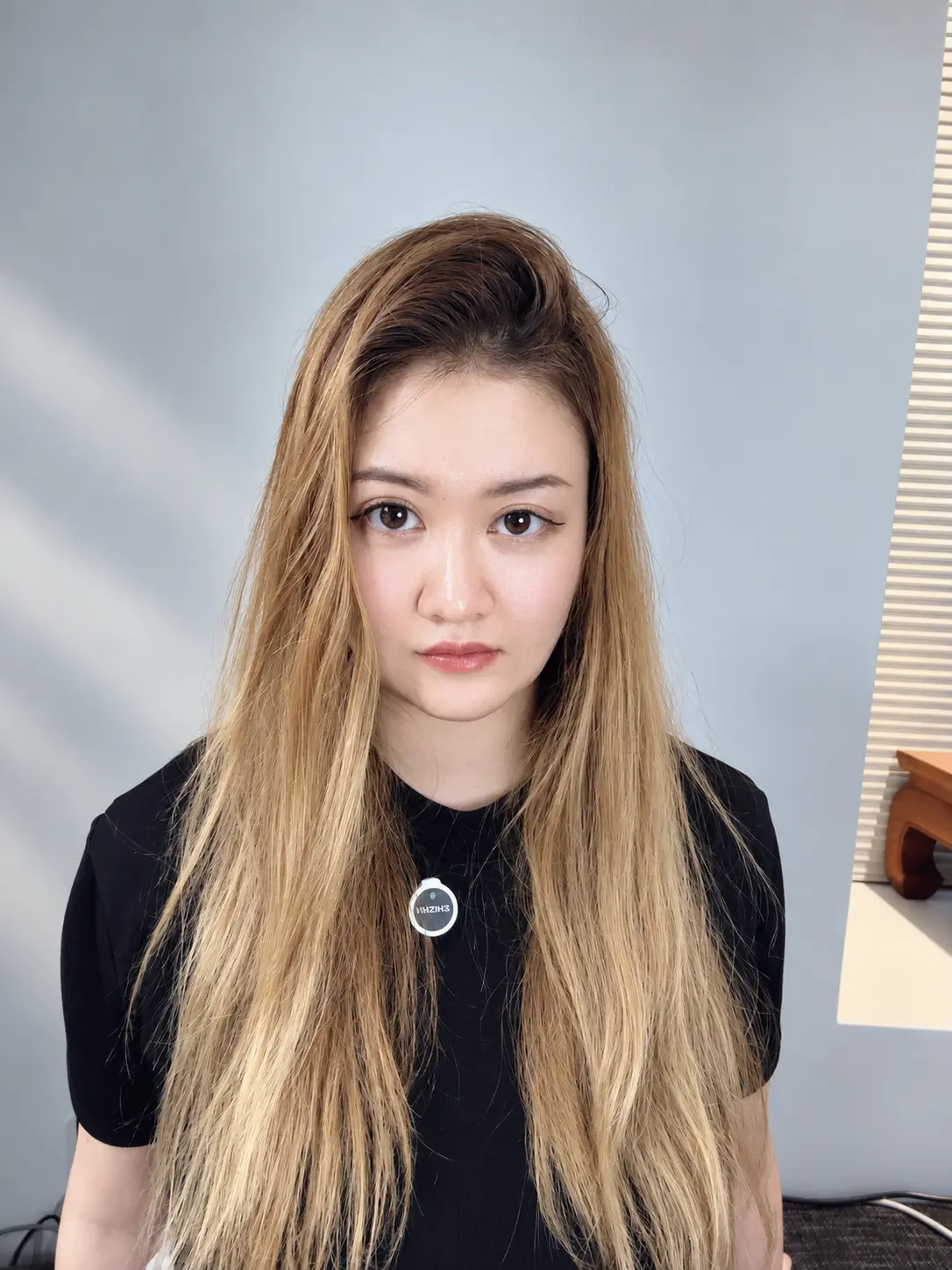
01
My practice unfolds through three series: Simulated Realities, Chronicles of Falling Light, and Perception. My method brings together the differing behaviours of multiple software tools, using successive transformations to paint emotional and perceptual experience. Alongside this work, I also experiment with AI in photography, deliberately testing its limits with surreal and abstract material. The resulting errors become creative material—a way of making a tool reveal its own boundaries.
88 WORKS
I depict forms that do not exist in reality yet retain an elusive connection to nature. They resemble flowers, or things remembered without ever having been seen: familiar, but impossible to identify. By combining the differing behaviours of digital tools across software, I repeatedly transform colour, structure and texture, giving visual form to impressions, memory and subconscious perception. This series is my most focused current exploration of a personal visual language.
21 WORKS
Chronicles of Falling Light builds its images from vertical lines that take on the qualities of light, exploring how abstract light might carry an experience of the sacred. Here, light is both a condition of visibility and a visual language for approaching the unseen. Imaginations of light associated with religious and mystical experience become structures that descend, penetrate, converge and dissolve, opening a space between sensation and spirit within digital painting.
22 WORKS
Simulated Realities begins with perceptions of the body and matter: textures of injury, impressions of water and swimming pools, and imagined sections through jade and gemstones. Rather than relying on hand drawing or AI generation, I construct these images through the differing behaviours of multiple software tools and repeated adjustments. Some forms emerge from experience; others imagine things I have never directly seen. I paint both the qualities of matter and the impressions they leave in perception and memory. Pain is one direction within this series, not an identity to which I want my practice confined.
02
21.09.2026
Creation is not always an explanation. Sometimes, it is only evidence that an unnamed feeling once existed.
NOTES ON MAKING / 001
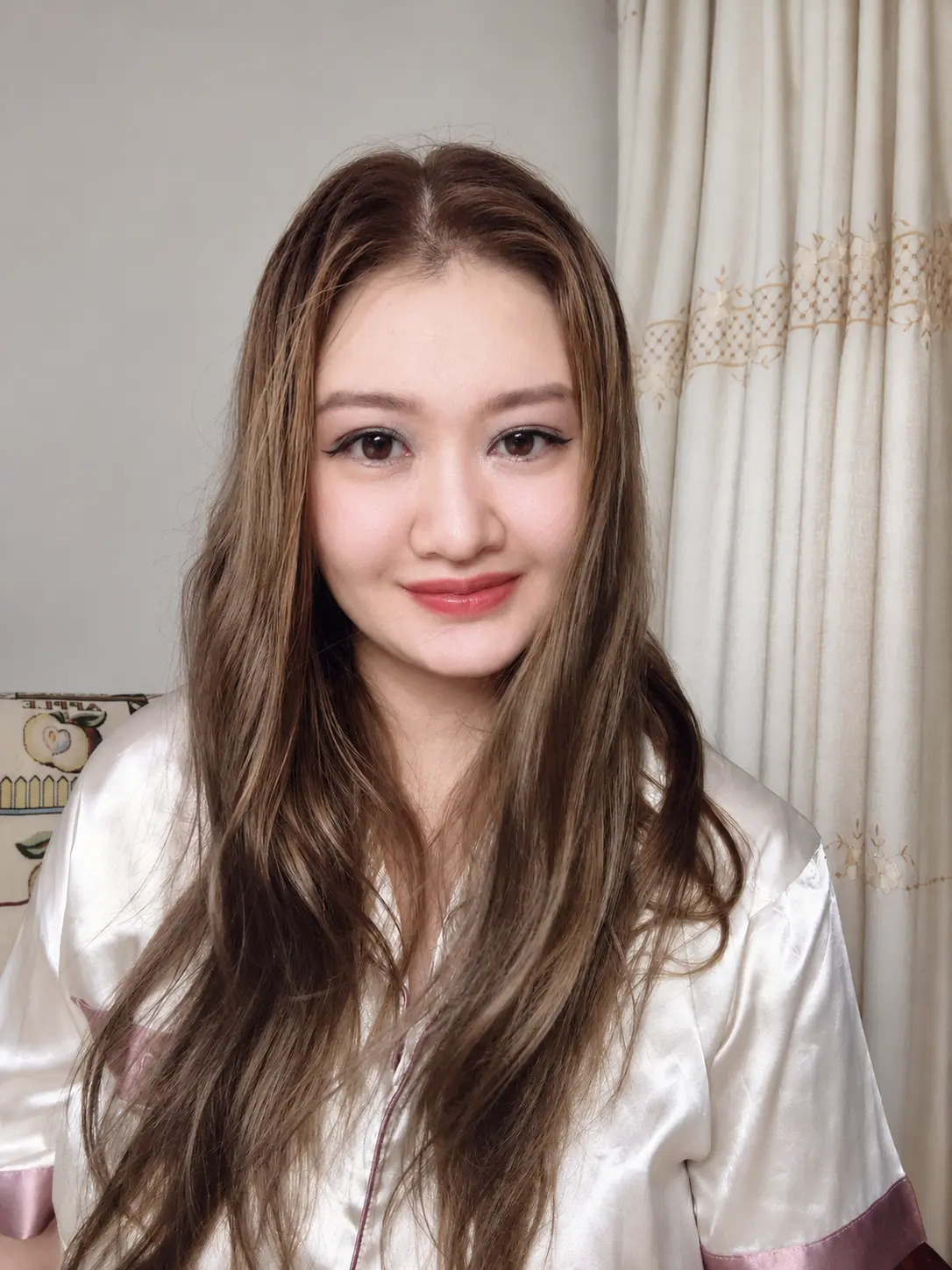
Fragments of life, collected without explanation.
03
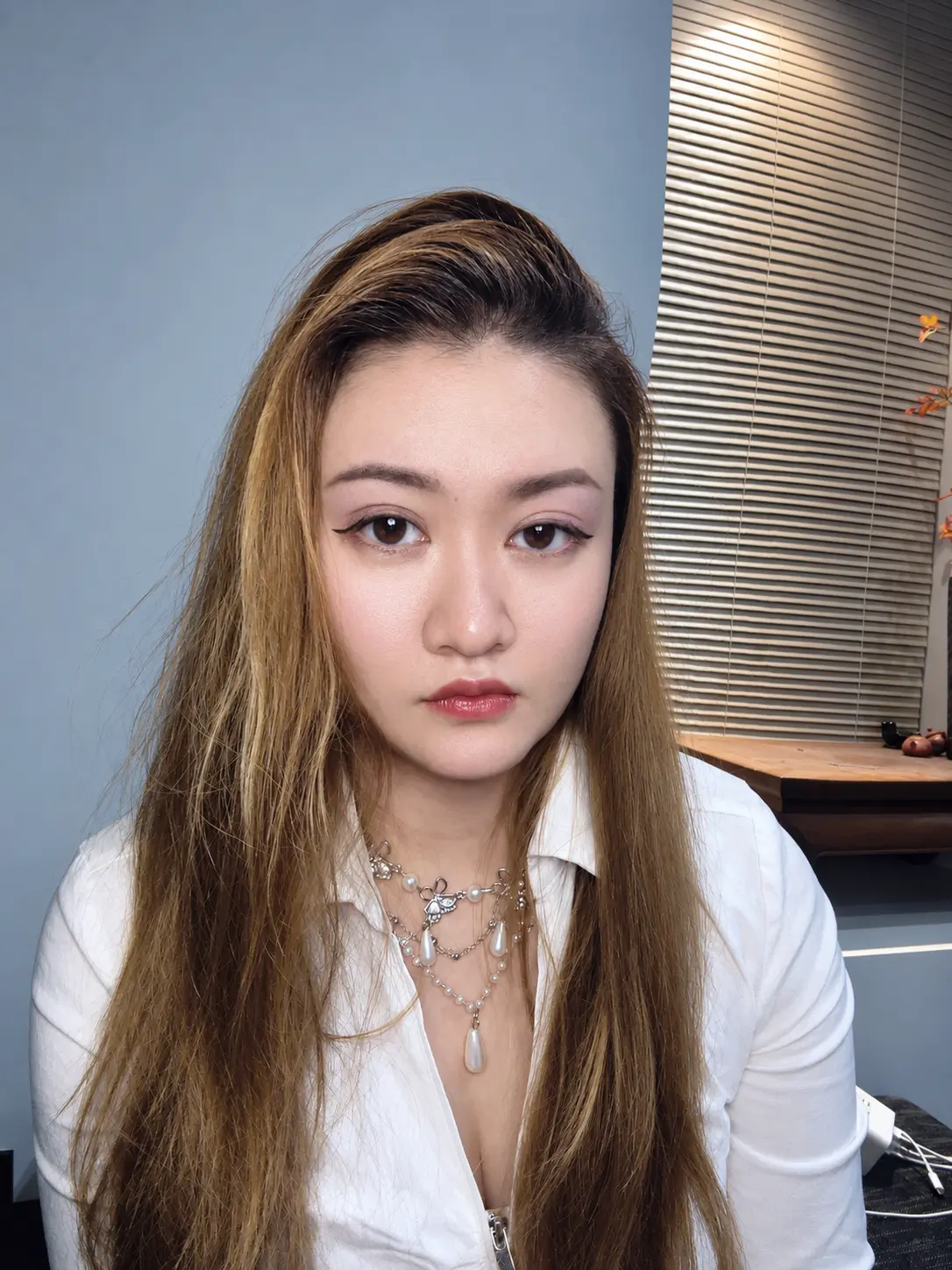
RELANE (Li Ziyue) is a Chinese visual artist working across digital painting, photography and moving image.
AI can imitate styles, learn composition and produce beautiful—even astonishing—images in moments. But what it can reproduce is a work's final visual appearance, not the process through which that work came into being.
My practice is grounded in innovation in the medium itself. Materials, traces, chance and the decisions I make at a particular moment together constitute the work. Why I pause here, disrupt a once-intact structure or preserve a seemingly mistaken mark—these choices arise from a real person's irreplaceable experience, consciousness and intuition.
I believe in the spiritual dimension of painting. It is not the production of images, but the traces an artist's consciousness, emotions and lived experience leave in a material medium. A true painting is not a precisely calculated output: it emerges through an ongoing encounter between a person and their materials—through resistance, compromise and choice. Every act of covering, disrupting, pausing and preserving records the artist's state of mind at that moment. It may be imperfect, yet it carries an irreplaceable meaning because it truly happened.
When images can be produced without limit, the value of simply making something beautiful is rapidly diminishing. What will become truly scarce is not the ability to generate images, but an artist's independent inner world and unrepeatable creative impulse.
I believe I will become an artist whose work marks a milestone—not by imitating existing styles, but by creating a new language of the medium.
Images can be copied. My painting cannot. What I want to leave behind is precisely this: something human that cannot be replicated.
She holds a BA in Film and Television Photography and Production from the Communication University of Zhejiang. Her work has been presented in Shanghai, Beijing, Shenzhen, Wuhan, Qingdao, Xiamen and Hong Kong.
RELANE / 李紫月
RELANE · 2026.10.15
RELANE (Li Ziyue)
Consider a question: If one day painting no longer required canvas, pigments, or even any material support in the traditional sense, could it still be considered painting?
If artificial intelligence becomes capable of generating almost every image we can imagine, why would humanity still need artists?
Drawing from my own artistic practice, I wish to explore a fundamental question:
As technology continuously transforms the ways images are produced, what is the essence of painting?
Is it the physical trace of pigment upon canvas? Is it evidence of the artist's manual labor? Or does its essence reside in the memories, perceptions, and spiritual experiences concealed beneath the visible image—elements that cannot be quantified?
I am RELANE, Li Ziyue, a digital painting artist.
I define my artistic practice through three dimensions of innovation: innovation in technical methodology, innovation in visual language, and innovation in the conceptual understanding of artistic media.
These three lines of inquiry ultimately converge upon a concept I have been developing: Post-Material Painting.
Through this concept, I seek to reconsider the relationships between painting, materiality, technology, and consciousness.
First, I would like to discuss my creative methodology.
I call this approach Cross-Software Composite Digital Painting.
In traditional painting, artists generally construct visual structures through the accumulation of pigments, brushstrokes, and physical materials.
My practice, however, does not take place within a single software environment.
Instead, I repeatedly transfer an image between different software applications, subjecting it to various forms of digital processing through which it is deconstructed, reorganized, transformed, and recreated.
Throughout this process, the image ceases to be a fixed object awaiting completion. It becomes an evolving visual state, continuously undergoing transformation.
Different software applications operate according to distinct systems of image processing. Each interprets color, space, texture, and detail through its own technological logic.
My approach is to explore the differences between these systems and transform them into visual effects that would be difficult to achieve through a single tool.
At times, an accidental shift in color becomes the starting point for the next stage of creation.
At other times, after multiple stages of reconstruction, the original figurative structure gradually dissolves, eventually giving rise to a visual form suspended somewhere between nature and fiction.
I do not believe that using multiple software applications is, in itself, sufficient to constitute artistic innovation.
What truly matters is how I transform the different operational logics of these technologies into a painting methodology with a distinctive personal identity.
For me, software is not simply a tool that executes my intentions. It is a medium that actively participates in visual experimentation.
Creation is therefore no longer a straightforward progression from concept to finished work, but an ongoing process of discovery.
With some of my works, I cannot even anticipate their final appearance at the beginning of the creative process.
And this unpredictability is precisely one of the most significant aspects of my practice.
The second dimension of my innovation concerns visual language.
I have always believed that painting should not be limited to the representation of reality.
From classical painting to modernism, artists have continuously sought to transcend the boundaries of visual experience.
Today, however, when photography, computer graphics, and artificial intelligence can reproduce objects with extraordinary realism, is it still necessary for painting to measure its achievement primarily through resemblance?
My answer is no.
What interests me more than depicting the world we have already seen is depicting things we have never truly seen, yet somehow seem to have experienced.
For example, what exactly is a flower?
Is it a botanical organ, a physical structure composed of cells, pigments, and tissues?
Or is it a vague constellation of colors, scents, and emotions preserved somewhere within our memory?
When we recall a flower, can we genuinely reconstruct every one of its petals with complete accuracy?
Usually, we cannot.
Memory shifts. Colors are altered by emotion. Details gradually disappear with the passage of time.
What ultimately remains in consciousness may be nothing more than a sensation that cannot be clearly articulated.
My abstract digital paintings attempt to capture precisely this condition.
In my work, petals may no longer follow the natural laws of growth. Leaves may lose their complete outlines, while colors may appear in unusual and uneven distributions.
These forms seem to originate in nature, yet they do not entirely belong to it.
At times, they resemble living tissues observed beneath a microscope.
At other times, they evoke distant cosmic landscapes or fragments of memories slowly fading into disappearance.
I hope that viewers encountering these images will experience an uncanny sense of familiarity.
They may feel that they have seen something similar before, yet remain unable to identify exactly what it is.
This visual experience, suspended between recognition and estrangement, is the personal artistic language I seek to establish.
I am not attempting to reproduce nature.
I am attempting to reorganize the ways in which human beings perceive it.
The third dimension, and the one I consider most worthy of deeper discussion, concerns the conceptual understanding of artistic media.
For a long time, we have been accustomed to understanding painting through its physical materials.
Oil painting depends on pigments and canvas. Watercolor relies on water and paper. Printmaking involves plates and printing processes.
We have even become accustomed to judging the artistic identity of a work through its physical existence.
But I would like to raise a question:
If an artwork does not possess a unique physical original, does that necessarily diminish its artistic value?
A digital painting can exist on a screen, be printed, projected, or presented through other continuously evolving forms of display.
It has no inherently fixed dimensions, nor does it necessarily possess a singular material form.
But does this mean that it lacks the spiritual dimension of painting?
I do not believe so.
Physical materials provide the means through which art becomes perceptible, but they are not necessarily the ultimate source of artistic value.
Of course, digital images are not literally detached from material existence.
They still depend upon computers, storage devices, electricity, and display technologies.
When I speak of immateriality, I am not denying these physical foundations.
Rather, I am emphasizing that the identity and meaning of painting need no longer be determined by a single, fixed physical support.
An artwork may exist primarily as a visual structure and an expression of spiritual experience.
This is the conceptual starting point from which I propose the idea of Post-Material Painting.
My understanding of Post-Material Painting encompasses three principal dimensions.
This means that painting is no longer defined exclusively by a particular material.
An artist may work with pigments or digital tools, create physical objects, or allow artworks to exist in mutable digital forms.
The essential question is not which tools an artist employs, but what kind of visual experience the artist establishes through the chosen medium.
I believe that digital images are equally capable of carrying spiritual significance.
By spirituality, I do not mean assigning some mysterious or supernatural meaning to an image.
Rather, I refer to the subjective nature of human experience.
For example, why are we sometimes moved by a color we cannot identify?
Why can an abstract painting evoke childhood memories without depicting a single recognizable scene from childhood?
Why can certain images, despite having no explicit narrative, evoke feelings of loneliness, time, life, or disappearance?
Such experiences often resist complete translation into language.
And I believe that one of painting's most important values lies precisely in its capacity to express what language cannot adequately communicate.
When a feeling cannot be clearly named, an image may become the means through which it comes into existence.
Within traditional systems of artistic evaluation, attention is often directed primarily toward the final image.
In my practice, however, the process through which a work comes into being is equally important.
The transformations an image undergoes as it moves between different software environments, the unexpected results produced by technical operations, and the subjective decisions I make at each stage collectively constitute the artwork.
Certain forms emerge unexpectedly, without having been consciously designed in advance.
Yet I must still determine whether they deserve to be preserved, whether they offer possibilities for further development, and whether they genuinely correspond to my aesthetic sensibilities.
This is a form of creation shaped by experimentation, contingency, and subjective judgment.
Technology generates possibilities, while the artist determines which possibilities acquire meaning.
Therefore, I believe that the value of an artwork resides not only in its final visual appearance but also in the irreversible process of its becoming.
When discussing digital painting, it is almost impossible to avoid the subject of artificial intelligence.
Some people may ask: If my works are already produced through digital technologies, why not simply generate them using AI?
Others may argue that, given enough reference images, artificial intelligence could reproduce the style of virtually any artist.
But I believe this assumption contains a fundamental misconception worth examining.
Does visual resemblance necessarily imply equivalence in artistic creation?
Consider my floral works, for example.
I deliberately preserve irregular leaf structures, uneven distributions of color across the spectrum, and unpredictable morphological variations.
These irregularities are not entirely the result of randomness.
They emerge from complex technical processes, as well as the continuous aesthetic judgments I make throughout the act of creation.
Based on my experience so far, I have found that AI struggles to generate genuinely irregular petals or convincingly reproduce certain forms of chromatic displacement and complex textures.
I therefore tend to regard AI-generated imagery as displaying an inclination toward regularity, symmetry, and visual uniformity.
The more fundamental distinction, however, is that although AI may learn and imitate certain visual characteristics, this does not mean that it has reproduced the entire process through which an artist originally created them.
For me, an artwork is not constructed according to a fixed set of visual rules.
It contains countless acts of selection, rejection, modification, and accidental discovery.
The deformation of a particular leaf may originate from an unexpected structure generated during an earlier stage of software processing.
A discontinuity in color may emerge from my subjective interpretation of a particular memory or sensation.
Such decisions cannot always be reduced to explicit generative rules.
Therefore, when I say that AI cannot easily replicate my artistic practice, what I truly mean is this:
It may imitate the visual surface of an artwork, but imitation alone cannot reconstruct my personal creative experiences, aesthetic judgments, or spiritual motivations.
I would not claim that artificial intelligence will never be capable of producing images that closely resemble my work.
However, generating a visually similar image and engaging in the same artistic practice are two fundamentally different things.
AI can participate in artistic production and may even become a creative instrument in the hands of artists.
But the value of art cannot be determined solely by the degree of visual similarity between images.
I believe that, in the future, the distinctions between artists may increasingly depend not upon who has mastered a particular visual style, but upon who is capable of raising original questions and deepening their responses through sustained artistic practice.
This leads me to another question I have been contemplating.
When we look at a painting, are we looking at an object that exists in reality, or at a human memory of that object?
My perspective leans toward the latter.
No image can ever be completely identical to reality.
Between the moment we encounter an object, the moment our brain interprets it, and the moment an artist reconstructs it through a particular medium, countless processes of perception and selection have already occurred.
We may believe that we are depicting reality.
But what we actually depict is often a reality that has already been processed and transformed by consciousness.
In other words:
Painting is not only concerned with how the world exists, but also with how the world is perceived by us.
This is why I am not particularly interested in reproducing a flower exactly as it appears in reality.
What interests me more is what remains of that flower after it has departed from immediate experience, entered memory, and gradually dissolved into indistinct impressions.
Sometimes, what remains is a color.
Sometimes, it is an outline.
And sometimes, it is nothing more than an inexplicable emotion.
My artistic practice attempts to give visual form to these experiences that have not yet been named by language.
Finally, I would like to consider the future of traditional hand painting.
I believe that, with the development of digital media and artificial intelligence, painting by hand is undergoing a profound transformation of its identity.
In the past, painting was one of humanity's most important means of producing images.
Today, however, images can be produced on a massive scale through photography, algorithms, and generative models.
This means that hand painting no longer possesses an inherent advantage in the production of images.
Many of the functions it once fulfilled are gradually being taken over by new technologies.
In this sense, hand painting appears to be entering a state suspended somewhere between presence and disappearance.
But by disappearance, I do not mean that people will cease to use brushes, nor that traditional painting will lose its value.
Quite the opposite.
As painting becomes less burdened by the practical demands of image production, its spiritual value may become even more pronounced.
When painting no longer needs to prove its ability to depict the world accurately, it may finally gain the freedom to turn more completely toward the inner world of human experience.
Hand painting will not automatically lose its significance because of digital technology.
Nor does digital painting need to invalidate traditional painting in order to establish its own legitimacy.
What is truly changing is our understanding of painting itself.
In the future, the value of an artist may no longer depend primarily upon the materials they use, the techniques they have mastered, or even the visual forms they produce.
Instead, it may depend upon whether their work establishes a distinctive mode of perception and allows others to reconsider their relationship with the world.
I have always believed that art is not merely a by-product of technological progress.
Technology can transform the efficiency of image production, expand the boundaries of visual form, and even reshape the entire artistic ecosystem.
But technological development cannot, in itself, answer the question of why art exists.
If every describable image can be generated, and every recognizable style can be imitated, what should artists continue to create?
My answer is:
A form of perception that has not yet been fully expressed.
I propose the concept of Post-Material Painting not to declare the end of traditional painting, nor to suggest that digital art is inherently superior to material-based art.
Rather, I seek to reconsider what remains truly irreplaceable about painting in an era when the production of images is undergoing fundamental transformation.
I believe that this irreplaceable quality resides not only in materials, not only in technique, and not even solely in the finished image.
It also encompasses the artist's consciousness, memory, judgment, and lived experiences—elements that cannot be entirely reproduced.
My practice of Cross-Software Composite Digital Painting represents an exploration of technical methodology.
My abstract visual language represents an exploration of unknown forms of perception.
And Post-Material Painting represents my ongoing inquiry into the very nature of painting.
For me, what truly matters has never been how visually complex an artwork appears.
What matters is whether it can make an otherwise invisible spiritual experience perceptible.
Perhaps one day, artificial intelligence will be capable of generating images that bear an extraordinary resemblance to my works.
But such resemblance will not diminish the significance of my own experiences, decisions, or creative processes.
Because art is not merely a reproducible outcome.
It is also evidence of how a human being has experienced the world.
The future of painting may not lie in creating more images of things we already recognize, but in allowing what has never been seen to take shape for the very first time.
This is my understanding of Post-Material Painting.
And it is the direction I hope to continue exploring through my artistic practice.
RELANE (Li Ziyue)
October 15, 2026
思考一个问题:如果有一天,绘画不再需要画布,不再需要颜料,甚至不再需要任何传统意义上的物质载体,那么,它还算是绘画吗?如果人工智能已经能够生成几乎所有我们能够想象的图像,那么,人类为什么还需要艺术家?
我想从自己的创作出发,讨论一个问题:当技术不断改变图像的生产方式,绘画的本质究竟是什么?是颜料在画布上留下的痕迹,是艺术家手工劳动的证明,还是隐藏在图像背后,那些无法被量化的记忆、感知与精神经验?
我是一名数字绘画艺术家,RELANE,李紫月。我将自己的艺术实践概括为三个层面的创新:技术方法的创新、视觉语言的创新,以及媒介观念的创新。而这三个层面的探索,最终指向了我正在思考的一个概念——后物质绘画,Post-Material Painting。
我希望借此重新讨论绘画与物质、技术、意识之间的关系。
首先,我想谈谈我的创作方法。我将它命名为“跨软件复合数字绘画”。在传统绘画中,艺术家通常通过颜料、笔触和物质材料的叠加,建立作品的视觉结构。而我的创作不是在单一软件中完成的。
我会让一幅图像在不同软件之间反复流转,通过多种数字处理方式,对它进行解构、重组、变形与再创造。在这个过程中,图像不再是一个等待完成的固定对象,而是一种不断发生变化的视觉状态。不同软件拥有不同的图像处理逻辑,它们对颜色、空间、纹理和细节的理解并不相同。
我所做的,就是利用这些技术之间的差异,创造出某种难以通过单一工具直接实现的视觉效果。
有时候,一种偶然产生的色彩偏移,会成为下一阶段创作的起点。有时候,图像在多次重构之后,原本具象的结构会逐渐消失,最终形成一种介于自然与虚构之间的视觉形态。我并不认为使用多个软件本身就意味着艺术创新。
真正重要的,是我如何将不同技术的处理逻辑转化为一种具有个人特征的绘画方法。
对我而言,软件不是替我完成作品的工具,而是参与视觉实验的媒介。创作也不再是从构思到结果的简单执行,而是一种持续的发现。我的某些作品,甚至无法在创作开始时预知最终的样貌。而这种不可预知性,恰恰是我创作中最重要的部分之一。
第二个层面的创新,是视觉语言。我一直认为,绘画不应该仅仅承担再现现实的功能。从古典绘画到现代主义,艺术家曾经不断尝试突破视觉经验的边界。而在今天,当摄影、计算机图形和人工智能已经能够高度逼真地再现物体时,绘画是否还有必要继续以“像不像”为主要标准?
我的回答是否定的。比描绘我们已经看见的世界更让我感兴趣的,是描绘那些我们从未真正看见,却似乎曾经感受过的事物。例如,一朵花究竟是什么?
它是植物学意义上的器官,是由细胞、色素和组织构成的物质结构,还是我们记忆中某种模糊的颜色、气味与情绪?
当我们回忆一朵花时,我们真的能够准确还原它的每一片花瓣吗?
通常不能。
记忆会发生偏移,颜色会被情绪改变,细节会在时间中逐渐消失。最后留在意识里的,可能只是一种无法清晰描述的感受。我的抽象数字绘画,正是试图捕捉这种状态。在我的作品中,花瓣可能不再遵循自然界的生长规律,叶片可能失去完整的轮廓,色彩可能呈现出异常的分布。它们似乎来自自然,却又不完全属于自然。有时像显微镜下的生命组织,有时像某种遥远的宇宙景观,也有时像正在消失的记忆碎片。我希望观众面对这些图像时,产生一种奇异的熟悉感。
你似乎在哪里见过它,却又无法说出它究竟是什么。这种介于识别与陌生之间的视觉经验,就是我希望建立的个人语言。我不是在复制自然,而是在重新组织人类对于自然的感知。
第三个层面,也是我认为最值得深入讨论的部分,是媒介观念。长期以来,我们习惯于通过物质材料理解绘画。油画依赖颜料和画布,水彩依赖水和纸张,版画依赖制版与印刷。我们甚至习惯于通过作品的物理存在来判断它的艺术属性。但我想提出一个问题:
如果一幅作品没有唯一的物理原作,它的艺术价值就会因此降低吗?
一幅数字绘画可以存在于屏幕上,也可以被打印、投影,甚至以其他不断变化的形式展示。它没有天然固定的尺寸,也未必拥有唯一的物质形态。但这是否意味着它缺少绘画的精神性?
我认为并不是。
因为物质材料是艺术得以呈现的方式,却不一定是艺术价值的最终来源。当然,数字图像并非真正脱离物质。它依然依赖计算机、存储设备、电力和显示媒介。我所说的“非物质性”,并不是否认这些物质基础,而是强调:绘画的身份和意义,不必再由某一种固定的物理载体决定。艺术作品可以首先作为一种视觉结构和精神表达而存在。这也是我提出“后物质绘画”这一概念的出发点。
我所理解的后物质绘画,主要包含三个方面。
首先,绘画不必依赖传统物质载体。
这意味着绘画不再被某一种材料所定义。艺术家可以使用颜料,也可以使用数字工具;可以制作物理作品,也可以让作品以可变的数字形态存在。真正需要讨论的,不是作品使用了什么工具,而是艺术家通过这种媒介建立了什么样的视觉经验。
其次,我认为数字图像同样具有精神性。这种精神性,并不是给一幅图像赋予某种神秘的意义。它更多地来自人的主观经验。例如,我们为什么会被某种无法辨认的颜色打动?
为什么一幅抽象作品能够唤起童年记忆,却没有描绘任何具体的童年场景?为什么有些图像明明没有明确的叙事,却能让人感受到孤独、时间、生命或者消逝?这些感受往往无法被完整地翻译成语言。而我恰恰认为,绘画的重要价值之一,就是表达那些语言无法充分表达的东西。
当一种感受无法被清晰命名,图像就可能成为它存在的方式。
第三,我认为创作过程本身具有艺术价值。在传统的作品评价体系中,我们常常更关注最终呈现的图像。但在我的实践中,作品的形成过程同样重要。图像在不同软件之间经历的变化,技术处理产生的偶然性,以及我在每个阶段做出的主观选择,共同构成了作品。一些意外出现的形态,并不是我预先设计好的。但我会判断它是否值得保留,是否能够继续发展,以及它是否真正符合我的审美感知。这是一种由实验、偶然性与主观判断共同构成的创作。技术产生可能性,而艺术家决定哪些可能性具有意义。因此,我认为一幅作品的价值,不仅存在于最终的图像之中,也存在于它不可逆转的生成历程之中。
谈到数字绘画,就不可避免地要谈到人工智能。
有人可能会问:既然你的作品本身就是通过数字技术完成的,为什么不能直接使用AI生成?甚至有人认为,只要给人工智能足够多的参考图像,它就能够复制任何艺术家的风格。但我认为,这里存在一个值得讨论的误区。
视觉上的相似,是否等于艺术创作上的等同?
以我的花卉作品为例。我会刻意保留一些不规则的叶片结构、非均匀的色谱分布,以及难以预测的形态变化。这些不规则,并不完全是随机产生的。
它们来自复杂的技术处理,也来自我在创作过程中不断进行的审美判断。
以目前的经验来看,人工智能并不能够生成不规则的花瓣,也不能够模拟色彩错位和复杂纹理。所以,我认为AI天然生成规则、对称或者均匀的图像。最大的区别在于,AI可以学习并模拟某种视觉特征,却不意味着它复现了艺术家创造这些特征时的全部过程。
对我来说,一幅作品并不是由一套固定的视觉规律构成的。它包含无数次选择、否定、修改与偶然发现。某一片叶子的变形,可能来自前一个软件中意外出现的结构;某一处颜色的断裂,可能来自我对某种记忆感受的主观判断。这些决定并不总能被总结为明确的生成规则。
因此,当我说AI难以复制我的创作时,我真正强调的是:它或许可以模仿作品的视觉表面,却无法仅凭这种模仿,重建我个人的创作经历、审美判断与精神动机。
我不会断言,人工智能永远无法生成与我作品相似的图像。但生成一幅相似的图像,和完成同一种艺术实践,是两回事。AI可以参与艺术生产,甚至成为艺术家的创作工具。但艺术的价值不能仅仅通过图像之间的相似程度来判断。我相信,未来艺术家之间的区别,可能越来越不在于谁掌握了某种视觉风格,而在于谁能够提出独特的问题,并通过创作不断深化自己的回答。
这又引出了我一直思考的另一个问题。我们观看一幅绘画时,究竟是在观看一个真实存在的对象,还是在观看人类对于这个对象的记忆?我的观点更倾向于后者。因为任何图像都不可能完整地等同于现实。从我们看见一个对象,到大脑理解它,再到艺术家通过某种媒介重新表现它,中间已经经历了无数次感知与选择。我们以为自己在描绘现实,但实际上,我们描绘的往往是经过意识加工之后的现实。
也就是说,绘画不仅是关于世界如何存在,更是关于世界如何被我们感知。这也是为什么,我并不执着于描绘一朵真实的花。我更关心的是,当它离开现实,进入记忆,又在记忆中逐渐模糊时,最终还会剩下什么。有时候是颜色,有时候是轮廓,有时候甚至只剩下一种无法解释的情绪。而我的创作,就是试图让这些尚未被语言命名的感受获得一种视觉形态。
最后,我想讨论传统手绘的未来。我认为,随着数字媒介和人工智能的发展,手工绘画正在经历一次深刻的身份转变。过去,绘画是人类制造图像的重要方式。而今天,图像已经可以通过摄影、算法和生成模型被大量生产。这意味着,手绘不再拥有图像生产的天然优势。它曾经承担的许多功能,正在被新的技术逐渐取代。从这个意义上说,手绘似乎正在进入一种介于存在与消失之间的状态。
但我所说的消失,并不意味着未来不再有人使用画笔,也不意味着传统绘画将失去价值。
恰恰相反。当绘画不再需要承担大量实用性的图像生产任务时,它的精神价值反而可能更加突出。当绘画不再必须证明自己能够准确描绘世界时,它才有机会更加彻底地转向人的内在世界。手工绘画不会因为数字技术而自动失去意义,数字绘画也不需要通过否定传统绘画来证明自身。
真正发生变化的,是我们理解绘画的方式。
未来,艺术家的价值或许不再主要取决于他使用什么材料,掌握什么技法,甚至不完全取决于他创造了什么样的视觉形式。而在于他的作品是否建立了一种独特的感知方式,是否让人重新理解自己与世界的关系。
我始终认为,艺术不是技术进步的附属品。
技术能够改变图像的生产效率,改变视觉形式的边界,甚至改变整个艺术生态。但技术的发展,并不能自动回答艺术为什么存在。如果所有可以描述的图像都能够被生成,如果所有可以识别的风格都能够被模仿,那么艺术家还应该创造什么?我的回答是:
创造一种尚未被充分表达的感知。
我提出“后物质绘画”,不是为了宣布传统绘画的终结,也不是为了证明数字艺术天然优于物质艺术。而是希望重新思考,在图像生产方式被彻底改变的时代,什么才是绘画真正不可替代的部分。我相信,它不只是物质,不只是技巧,甚至不只是最终呈现出来的图像。它还包括艺术家的意识、记忆、判断,以及那些无法被完全复制的人生经验。我的跨软件复合数字绘画,是对技术方法的探索;我的抽象视觉语言,是对未知感知的探索;而后物质绘画,则是我对绘画本体的一次持续追问。对我而言,真正重要的,从来不是让一幅画看起来有多么复杂,而是它能否使某种原本不可见的精神经验变得可以被感知。
也许有一天,人工智能能够生成与我的作品极其相似的图像。但它所生成的相似,并不会使我曾经的感受、选择与创作过程失去存在的意义。因为艺术并不只是一个可以被复制的结果。它也是一个人曾经如何感受世界的证明。绘画的未来,或许不在于创造更多我们已经认识的图像,而在于让那些尚未被看见的事物,第一次拥有自己的形状。这就是我理解的后物质绘画。也是我希望通过自己的艺术实践,持续探索的方向。
—— RELANE 2026.10.15
Artist CV
BA, Film and Television Photography and Production, Communication University of Zhejiang
Someone Like You, contemporary art exhibition, GM Garage Museum, Shanghai
Animism: International Invitational Art Exhibition, Embassy of the Kingdom of Lesotho in China, Beijing
New Horizons: Contemporary Young Artists Nomination Exhibition, parallel exhibition of the 3rd Asia Art Biennale, Shenzhen Red Cube, Shenzhen
16th College Student Art Expo, Wuhan International Convention & Exhibition Center, Wuhan; four works selected
Traces of the Sea Breeze, printmaking exhibition, Shibei District Art Museum, Qingdao
Concealment, group photography exhibition, Artron Art Center, Shenzhen
Who Am I: Pudong Contemporary Art Exhibition, Pudong New Area Culture and Art Guidance Center, Shanghai
Threads of Blossoms, The Paper × Dotree group exhibition, Dotree Living Hall, Shanghai
Feeling and Knowing, group exhibition, Dalian City Art Museum, Dalian
Art Amoy International Fair, group exhibition, Xiamen International Conference & Exhibition Center, Xiamen
Live Art — GUI2023 2nd Digital Art Exhibition, Xu Beihong Cultural Exchange Center
Feng Shui and Modern Abstract Art, solo exhibition salon, Guanpai International Aesthetics Gallery
Echoes of Home, EveryArt, shortlisted exhibition
Emerging Artist Award for Symbiosis, New Horizons: Contemporary Young Artists Nomination Exhibition
Silver Award for Falling City 2043, 6th Hong Kong Emerging Contemporary Design Awards
Earth Hour Caring Illustrator distinction for One Hour into the Future, 2024 Earth Hour International Illustration Co-creation Project, Shenzhen Illustration Association
Bronze Award for The Dissected Robot, 4th London Chinese Art Exchange Exhibition
Third artist interview, EveryArt
Second artist interview, EveryArt, during Art Amoy International Fair
Artist interview, EveryArt, alongside Echoes of Home
04